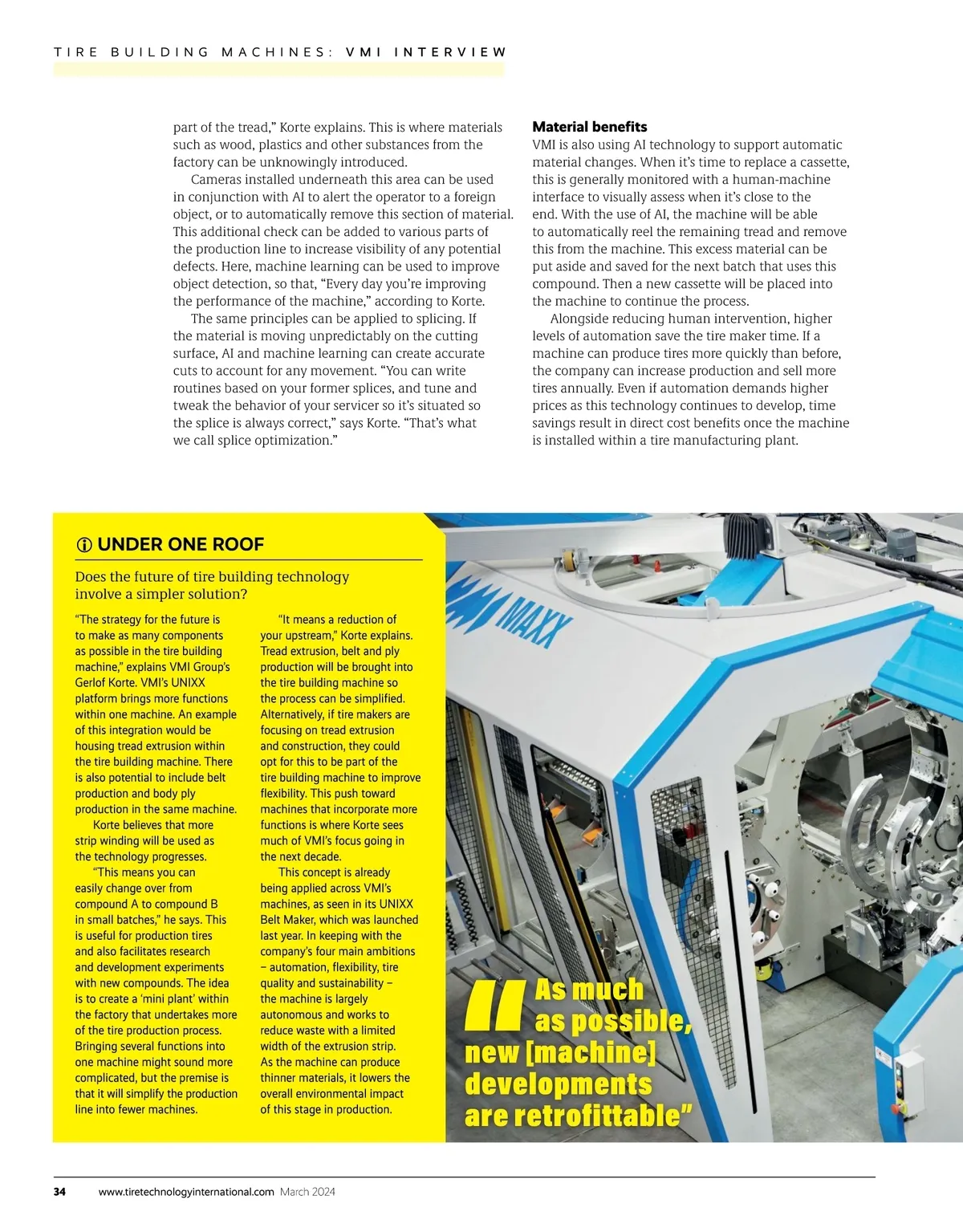
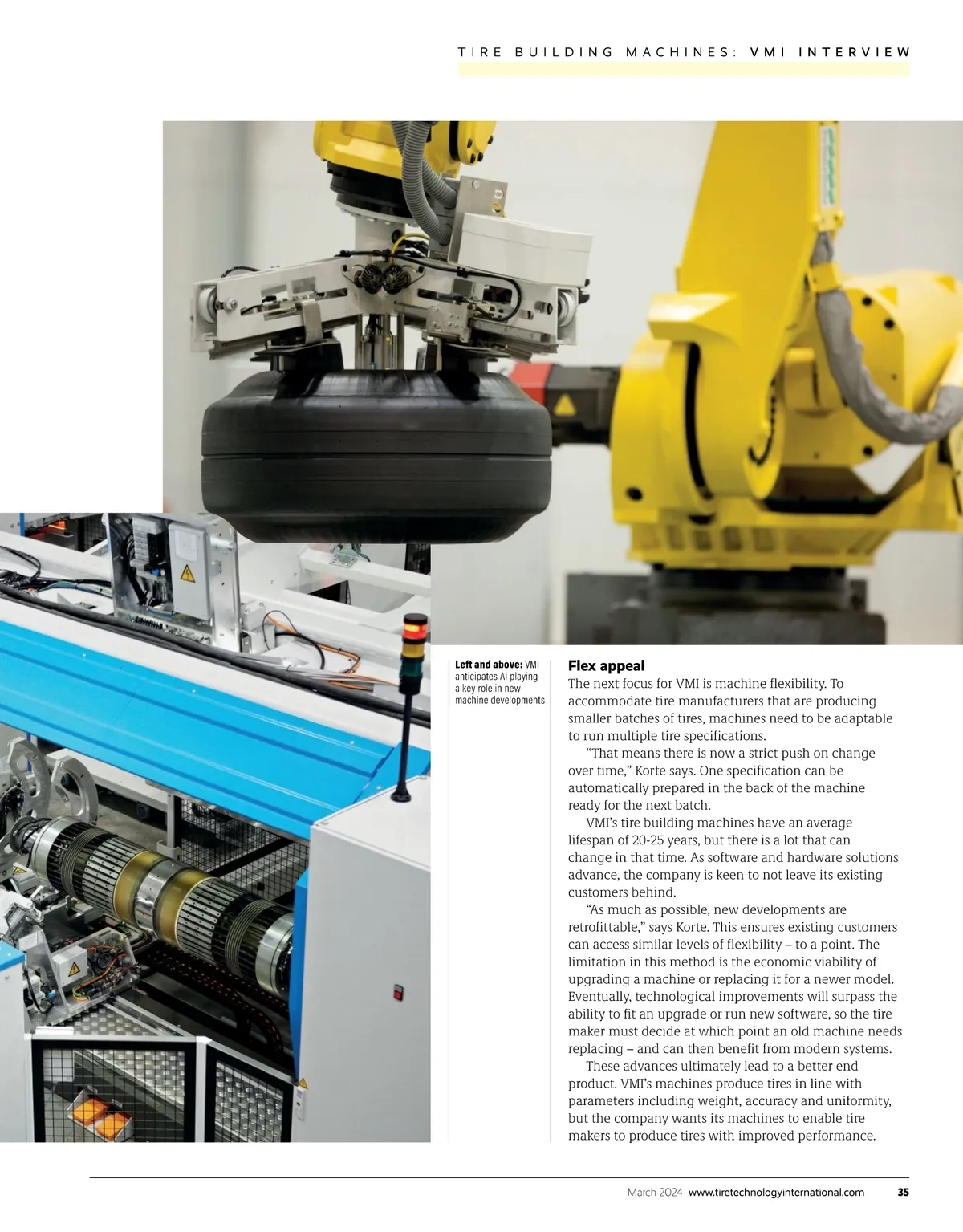
TIRE BUILDING MACHINES: VMI INTERVIEW Left and above: VMI anticipates AI playing a key role in new machine developments Flex appeal The next focus for VMI is machine flexibility. To accommodate tire manufacturers that are producing smaller batches of tires, machines need to be adaptable to run multiple tire specifications. “That means there is now a strict push on change over time,” Korte says. One specification can be automatically prepared in the back of the machine ready for the next batch. VMI’s tire building machines have an average lifespan of 20-25 years, but there is a lot that can change in that time. As software and hardware solutions advance, the company is keen to not leave its existing customers behind. “As much as possible, new developments are retrofittable,” says Korte. This ensures existing customers can access similar levels of flexibility – to a point. The limitation in this method is the economic viability of upgrading a machine or replacing it for a newer model. Eventually, technological improvements will surpass the ability to fit an upgrade or run new software, so the tire maker must decide at which point an old machine needs replacing – and can then benefit from modern systems. These advances ultimately lead to a better end product. VMI’s machines produce tires in line with parameters including weight, accuracy and uniformity, but the company wants its machines to enable tire makers to produce tires with improved performance. March 2024 www.tiretechnologyinternational.com 35
Tire Technology International March 2024 Issue : Page 35